At its core, the text focuses on how solid bodies respond to external forces—specifically through the lenses of stress, strain, and deformation. Popov’s pedagogical brilliance lies in his ability to bridge the gap between abstract physics and tangible engineering. He doesn't just present the formulas for torsion or axial loading; he explains the physical reality of how molecules within a beam resist being pulled apart. This approach helps students develop "engineering intuition," allowing them to predict how a structure might fail before they even pick up a calculator. Structure and Methodology
A version using the International System of Units is also available.
Whether you are using a physical copy or an electronic edition, the core curriculum of Popov's text covers the vital fundamentals required for civil, mechanical, aerospace, and structural engineering. The textbook typically breaks down into several key areas: 1. Stress and Strain (Axial Loading)
He was retiring. For real this time. The university had asked him to clear his digital archives, and somewhere in the labyrinth of his old hard drive, he found it: a folder labeled Popov_PDF_FINAL.pdf .
If you want, I can:
Computers can simulate complex stresses, but they cannot replace an engineer's intuitive understanding of structural behavior. If an engineer enters incorrect boundary conditions into software, the computer output will be flawed. Studying Popov’s foundational principles ensures that engineers can perform the essential "back-of-the-envelope" calculations required to cross-check digital simulations and ensure public safety.
Popov’s explanations are famously direct. He avoids academic jargon where simple language suffices, making the text accessible to non-native English speakers and undergraduate students.
Do not jump straight to the formulas. Understand how stress ( σ = P/A ) and strain ( ε = δ/L ) are derived.
A geometric approach using the area under the bending moment diagram.
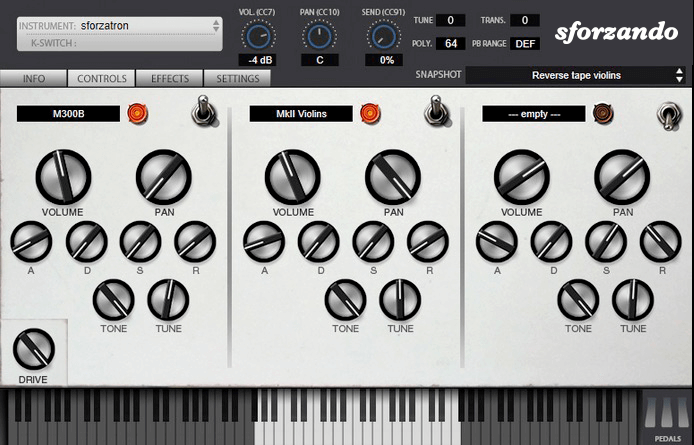
The SFZ Format is widely accepted as the open standard to define the behavior of a musical instrument from a bare set of sound recordings. Being a royalty-free format, any developer can create, use and distribute SFZ files and players for either free or commercial purposes. So when looking for flexibility and portability, SFZ is the obvious choice. That’s why it’s the default instrument file format used in the ARIA Engine.
OEM developers and sample providers are offering a range of commercial and free sound banks dedicated to sforzando. Go check them out! And watch that space often, there’s always more to come! You are a developer and want to make a product for sforzando? Contact us!
You can also drop SF2, DLS and acidized WAV files directly on the interface, and they will automatically get converted to SFZ 2.0, which you can then edit and tweak to your liking!
Download for freeInstrument BanksSupport
At its core, the text focuses on how solid bodies respond to external forces—specifically through the lenses of stress, strain, and deformation. Popov’s pedagogical brilliance lies in his ability to bridge the gap between abstract physics and tangible engineering. He doesn't just present the formulas for torsion or axial loading; he explains the physical reality of how molecules within a beam resist being pulled apart. This approach helps students develop "engineering intuition," allowing them to predict how a structure might fail before they even pick up a calculator. Structure and Methodology
A version using the International System of Units is also available.
Whether you are using a physical copy or an electronic edition, the core curriculum of Popov's text covers the vital fundamentals required for civil, mechanical, aerospace, and structural engineering. The textbook typically breaks down into several key areas: 1. Stress and Strain (Axial Loading) popov mechanics of materials pdf
He was retiring. For real this time. The university had asked him to clear his digital archives, and somewhere in the labyrinth of his old hard drive, he found it: a folder labeled Popov_PDF_FINAL.pdf .
If you want, I can:
Computers can simulate complex stresses, but they cannot replace an engineer's intuitive understanding of structural behavior. If an engineer enters incorrect boundary conditions into software, the computer output will be flawed. Studying Popov’s foundational principles ensures that engineers can perform the essential "back-of-the-envelope" calculations required to cross-check digital simulations and ensure public safety.
Popov’s explanations are famously direct. He avoids academic jargon where simple language suffices, making the text accessible to non-native English speakers and undergraduate students. At its core, the text focuses on how
Do not jump straight to the formulas. Understand how stress ( σ = P/A ) and strain ( ε = δ/L ) are derived.
A geometric approach using the area under the bending moment diagram. The textbook typically breaks down into several key areas: 1